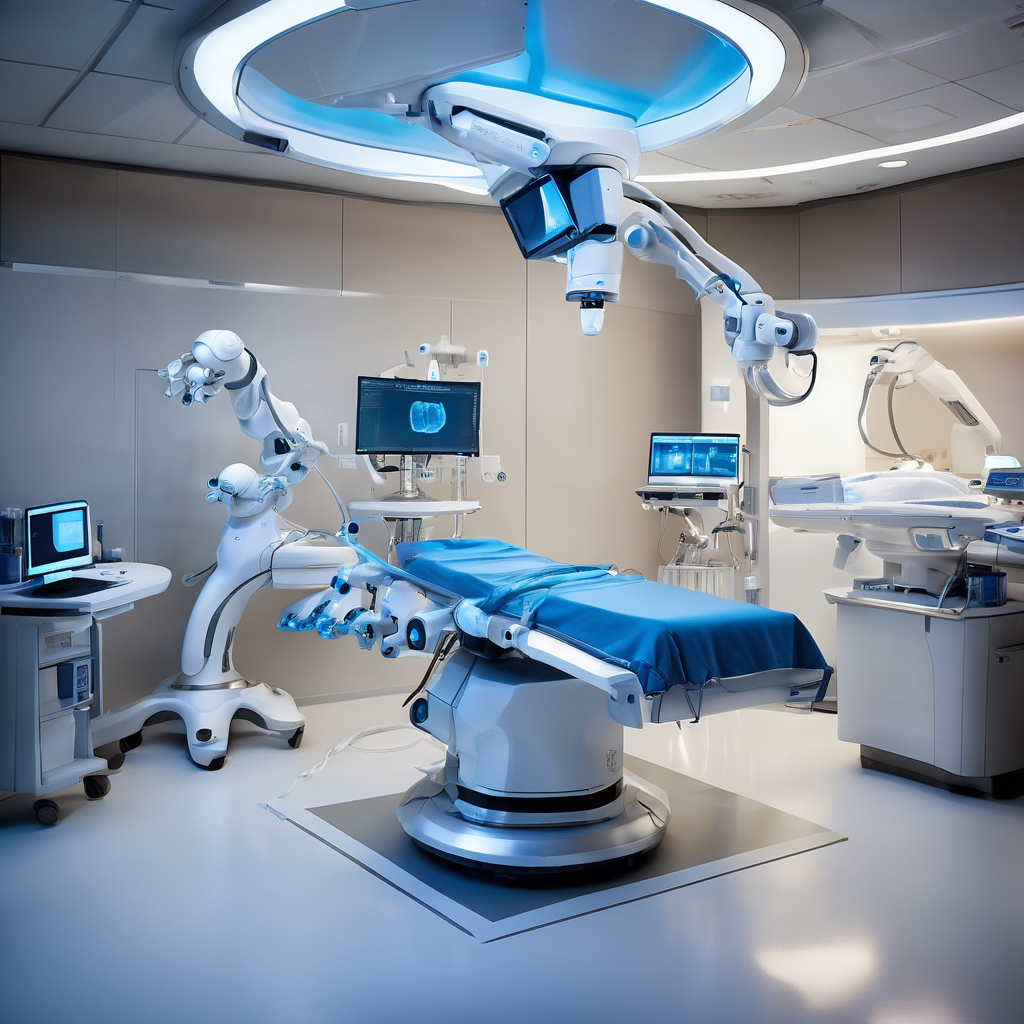
Cancer treatment is primarily based on surgery, radiation, and chemotherapy. For advanced or aggressive tumors, a multimodal approach targeting cancer at various levels yields the best outcomes. Surgery removes the solid tumor and nearby lymph nodes, adjuvant radiation eliminates microscopic cancer cells in the tumor bed after surgery, and chemotherapy targets cancer cells circulating in the body.
Advancements in robotics and radiation therapy have enhanced precision care and improved survival rates, making it essential for patients and caregivers to understand these innovations.
Robotic surgery is a cutting-edge form of minimally invasive surgery that is rapidly transforming cancer care globally. Unlike traditional open or laparoscopic procedures, robotic platforms offer surgeons enhanced precision and flexibility, allowing operations in difficult-to-reach areas. The most widely used system is a master-slave telemanipulator, where the surgeon controls robotic arms equipped with wristed instruments from an ergonomic console, viewing a magnified 3D high-definition image. Features like tremor filtration and motion scaling enable delicate surgical tasks that were previously challenging.
For cancer patients, robotic surgery offers considerable benefits including reduced pain, minimal blood loss, fewer infections, smaller scars, shorter hospital stays, and faster recovery. Multiple studies demonstrate that cancer cure rates and long-term outcomes with robotic surgery are equivalent to those of open or laparoscopic surgery. This approach is particularly effective in treating pelvic cancers such as prostate, cervix, endometrium, and rectum, as well as cancers of the kidney, bladder, esophagus, lung, and throat.
Although robotic procedures currently incur higher costs due to equipment and maintenance, prices are expected to decline as new domestic and international providers enter the Indian market. Most health insurance plans in India now cover robotic surgery, often with certain sub-limits, following guidelines set by the Insurance Regulatory and Development Authority of India in 2019.
The growth of robotic surgery in India is remarkable, with a 53% increase in procedures recorded in 2024, making it the fastest-growing market in the Asia-Pacific region. The sector’s value is projected to rise from $78 million in 2022 to $390 million by 2030. Emerging technologies integrate artificial intelligence, improved ergonomics, and multi-quadrant access to further reduce surgeon fatigue and complications. For eligible patients, robotic surgery is increasingly becoming the standard of care for minimally invasive oncology procedures.
Radiation therapy uses high-energy X-rays to damage cancer cell DNA. Earlier radiation machines, though effective, lacked precision, often exposing normal tissues to unnecessary radiation and causing side effects. Modern radiation therapy has evolved into highly personalized and precise treatment through advanced imaging, computing, engineering, and physics.
India’s Cancer Institute (WIA) has played a pioneering role in this evolution, installing one of Asia’s first Cobalt-60 units in 1956 and later the country’s first RapidArc system. A key advancement is Image-Guided Radiation Therapy (IGRT), which captures images before each session to ensure accurate tumor targeting, compensating for internal movements due to breathing, organ shifts, or tumor changes. Techniques like Intensity-Modulated Radiation Therapy (IMRT) and Volumetric Modulated Arc Therapy (VMAT) shape radiation beams precisely to tumors, significantly reducing side effects in head and neck, breast, brain, and prostate cancers.
Stereotactic radiation, including Stereotactic Radiosurgery (SRS) for brain tumors and Stereotactic Body Radiation Therapy (SBRT) for lung, liver, and spine cancers, delivers highly precise treatments in one to five sessions instead of the traditional 25 to 40. These “surgery without a knife” methods spare healthy tissues while delivering effective doses.
Adaptive Radiation Therapy allows treatment plans to be adjusted during sessions as tumors shrink or patient anatomy changes. The MR-Linac combines magnetic resonance imaging with radiation delivery, enabling real-time visualization and instant adjustment for tumors that move with breathing.
Beyond X-rays, proton and carbon-ion therapies provide more selective radiation with fewer long-term side effects, particularly beneficial for children. Innovations such as FLASH therapy, robotics, tumor-tracking systems, and digital virtual patient models are shaping the future of radiation oncology. Artificial intelligence reduces planning time by automatically outlining tumors and critical organs, improving efficiency and accuracy.
Advances in cancer-fighting technologies have made treatments more precise, safer, and less burdensome for patients. Robotics and modern radiation therapy have enhanced clinical outcomes, shortened hospital stays, and minimized side effects, contributing to higher satisfaction for clinicians and caregivers, and, most importantly, leading to more lives healed and saved.
Leave a Reply